
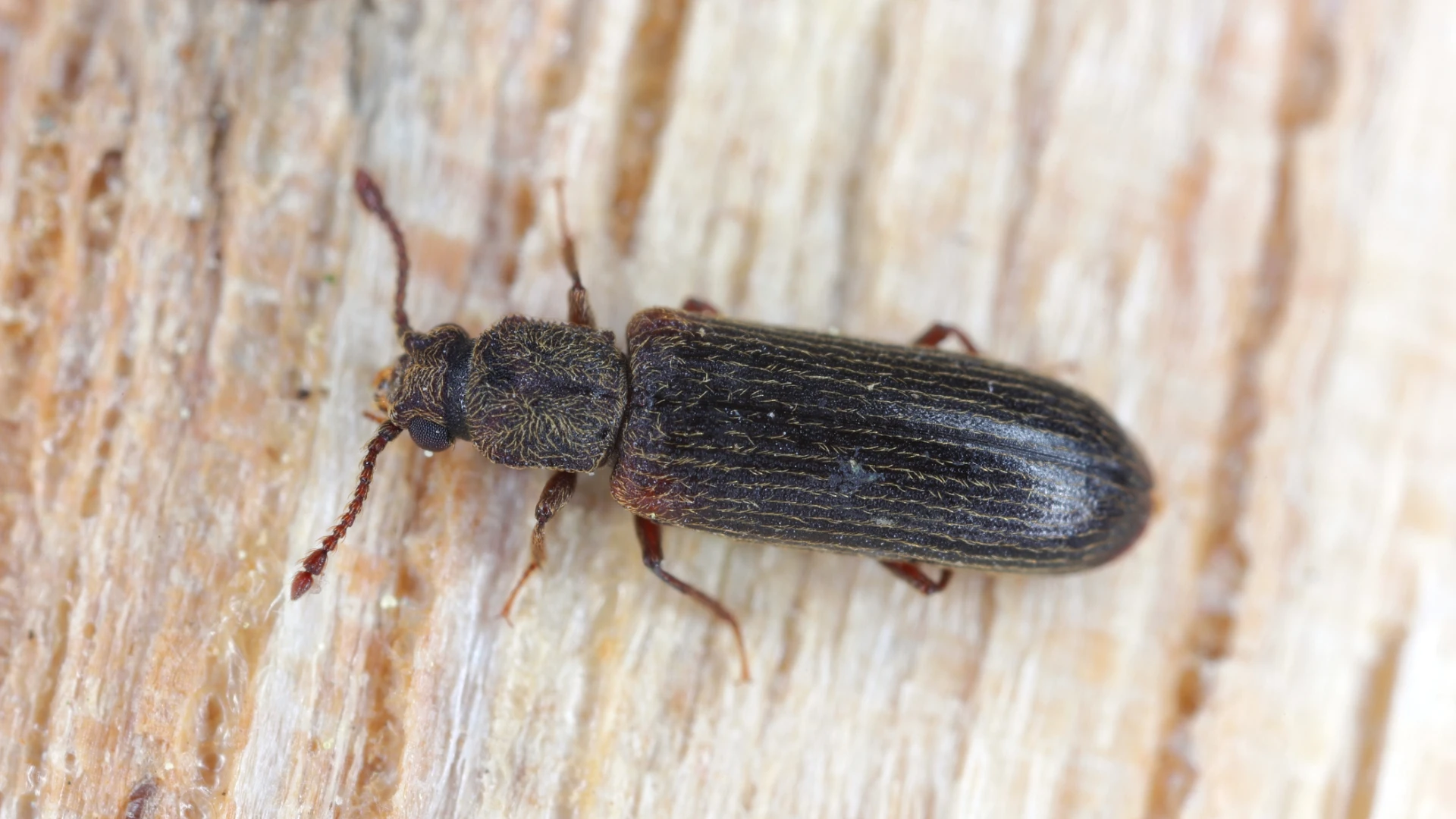

When homeowners think about structural pests that consume wood, termites are almost always the first culprit that comes to mind. While termites certainly cause immense financial and physical damage to properties each year, they are not the only hidden threat lurking within timber framing, hardwood flooring, and decorative wooden fixtures. Wood-boring beetles are a widespread and highly destructive class of insects that can quietly compromise the structural integrity of a building if left unchecked.
Unlike pests that roam openly across kitchen counters or buzz around windows, wood-boring beetles spend the vast majority of their multi-year life cycles completely hidden from sight. They operate deep within the core of wooden beams, studs, and floorboards. By the time a homeowner notices the external signs of an infestation, severe internal degradation has often already occurred. Ignoring these subtle red flags can turn a simple localized treatment into a catastrophic structural renovation project costing thousands of dollars.
The Hidden Life Cycle: Why the Danger Escalates Silently
To understand why wood-boring beetles are so perilous, one must look at their unique biological cycle. The adult beetles that you might occasionally find dead on a window sill are actually not the ones responsible for chewing through your home. The real destruction is carried out exclusively by the insect’s larvae, often referred to colloquially as woodworms.
The cycle begins when an adult female beetle deposits her microscopic eggs directly into the natural cracks, crevices, or open pores of unsealed wood. Once the eggs hatch, the tiny, hungry larvae immediately tunnel downward into the timber. This marks the beginning of a prolonged destructive phase. Depending on the specific species of beetle and the moisture content of the wood, the larvae will live inside the wood for anywhere from two to ten years, continuously eating, tunneling, and growing.
During this extensive period, the exterior of the wood remains completely smooth and seemingly untouched, offering no visual clues to the homeowner. The larvae chew a complex maze of interlocking galleries through the heartwood, structurally weakening the timber from the inside out. Only when the larvae finally mature into adult beetles do they chew their way out to the surface, leaving behind small, clean exit holes to escape, mate, and repeat the devastating cycle on adjacent wood surfaces.
Identifying the Culprits: Common Types of Wood-Boring Beetles
Not all wood-boring beetles target the same types of timber. Understanding the specific varieties helps in evaluating the potential risk to your home’s infrastructure.
-
Powderpost Beetles: This is a broad category that includes Lyctid beetles, which primarily target seasoned hardwoods such as oak, ash, hickory, and walnut. They are a massive threat to high-end hardwood flooring, decorative molding, oak cabinets, and expensive wooden furniture. They earn their name because their larvae chew wood so finely that they reduce the internal structure to a flour-like, powdery dust.
-
Anobiid Powderpost Beetles: Unlike Lyctids, Anobiid beetles prefer damp softwoods and hardwoods. They frequently infest structural crawlspaces, damp basements, joists, and subfloors. Because they thrive in areas with high humidity, they are highly capable of destroying the primary load-bearing foundations of older homes.
-
Old House Borers: Despite the deceptive name, these longhorn beetles are actually most commonly found in relatively new homes, typically those under ten years old. They target the resin-rich sapwood of softwoods like pine, spruce, and fir, which are the primary materials used to frame modern houses. Their larvae are exceptionally large and can cause rapid, severe structural damage to wall studs and roof trusses in a short amount of time.
Critical Warning Signs You Cannot Afford to Ignore
Because these pests operate in the dark, homeowners must learn to recognize the subtle secondary clues that point to an active, ongoing infestation.
Emerging Exit Holes
The most definitive sign of an infestation is the appearance of tiny, round or oval exit holes in your woodwork. Powderpost beetle holes are incredibly small, often matching the diameter of a pinhead, while old house borer holes can be significantly larger. If the edges of these holes look clean, bright, and show light-colored wood inside, the hole is fresh, indicating that an adult beetle has recently emerged and the infestation is actively progressing.
Accumulations of Frass
As beetle larvae tunnel through wood, they must eject their digested waste material and wood fragments. This mixture is known as frass. If you notice small, mysterious piles of fine sawdust accumulating on the floor beneath a joist, along baseboards, or at the bottom of wooden cabinets, it is a clear sign that larvae are actively boring directly above that spot. Powderpost beetle frass feels smooth and powdery like talcum powder, whereas Anobiid frass has a distinctly gritty texture.
Audible Boring Noises
In quiet rooms during the evening hours, it is sometimes actually possible to hear a severe infestation. The larvae of larger species, such as the old house borer, possess powerful mandibles. When a home is heavily infested, homeowners can hear a faint, rhythmic ticking or scraping sound coming from inside the drywall or ceiling timbers as the larvae chew through the wood fibers.
The Long-Term Consequences of Procrastination
Choosing to ignore the signs of wood-boring beetles because the damage seems localized is a dangerous gamble. Over time, the interconnected tunnels carved by multiple generations of larvae structurally hollow out load-bearing members.
When a structural joist or support beam is riddled with galleries, its ability to load-bear drops dramatically. Floors may begin to sag or bounce under foot traffic, drywall can crack due to structural shifting, and in extreme scenarios involving roof trusses or foundation piers, catastrophic structural failure can occur. Furthermore, severe beetle damage significantly degrades the resale value of a home, as home inspectors easily spot active infestations and structural wood rot, halting real estate transactions until expensive remediation is completed.
Frequently Asked Questions
Can wood-boring beetles spread from a piece of antique furniture to the structural framing of a house?
Yes, certain species like powderpost beetles can absolutely migrate from infested furniture into your home’s structural framing. If an antique wooden chair or picture frame contains active larvae, the emerging adult beetles will look for nearby unsealed, bare wood to lay their next batch of eggs. This makes it critical to thoroughly inspect, quarantine, or treat any secondhand or antique wooden items before bringing them into your living space.
Does painting or sealing wood prevent beetle infestations?
Yes, applying a thorough coat of paint, polyurethane, or heavy varnish is an excellent preventive measure. Adult female beetles cannot lay their eggs on smooth, sealed surfaces because they require exposed, raw wood pores and natural cracks to deposit their eggs. However, sealing the surface will not kill larvae that are already living deep inside the wood before the finish was applied.
How do professional pest control companies eliminate wood-boring beetles?
Treatment options depend strictly on the severity and location of the infestation. For localized areas, professionals can inject specialized borate-based wood preservatives directly into the exit holes or apply a heavy topical borate spray to raw timber, which penetrates deep into the wood fibers and poisons the feeding larvae. For widespread, whole-house structural infestations involving structural framing and subfloors, structural tent fumigation is often required to eliminate all life stages.
What is the ideal wood moisture content to discourage beetle growth?
Wood-boring beetles, particularly Anobiids, depend heavily on moisture to survive and grow. They thrive best in wood with a moisture content above 15 to 20 percent. Homeowners can actively discourage beetle activity by reducing humidity in crawlspaces and basements using heavy-duty vapor barriers, proper ventilation, and dehumidifiers to keep wood moisture levels safely below 12 percent.
How can I distinguish between wood-boring beetle frass and regular sawdust?
Regular sawdust from construction is usually composed of irregular, varied wood shavings and chips. Beetle frass is highly uniform in consistency because it has passed through or been processed by the insect. Powderpost beetle frass is exceptionally fine, resembling sifted flour or baking powder, and will completely lose its shape when rolled between your fingertips, whereas construction dust feels rougher.
Are wood-boring beetles capable of infesting engineered wood products like MDF or plywood?
MDF (medium-density fiberboard) and particleboard are generally safe from infestations because the intense heat, chemical glues, and heavy resins used during manufacturing make them unpalatable and toxic to beetle larvae. However, plywood can occasionally fall victim to certain species because it still contains distinct layers of natural raw sapwood sheets that larvae can navigate and consume if the moisture levels are high enough.
Comments are closed.